
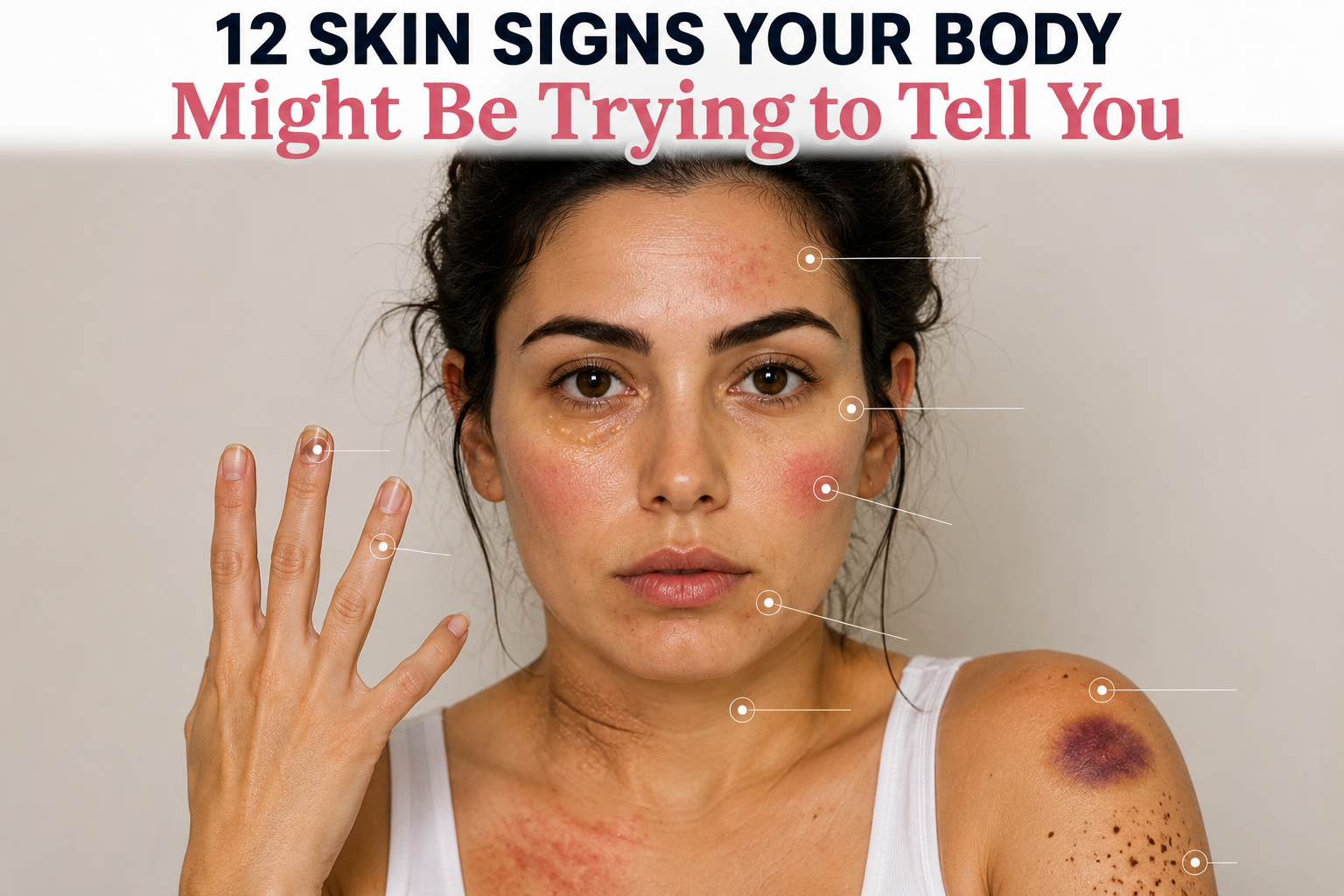
12 Skin Warning Signs You Should Never Ignore (And What They May Mean)
What Can Your Skin Reveal About Your Overall Health?
Most people think of their skin as something separate from the rest of their body. When a breakout appears, they blame stress. When dryness develops, they switch moisturizers. When redness shows up, they start searching for a new serum. While these approaches can sometimes help, the truth is that your skin is often a reflection of what is happening internally.
Dermatologists frequently describe the skin as a window into overall health because certain conditions can create visible changes long before other symptoms appear. In some cases, the skin may provide clues about blood sugar regulation, inflammation, autoimmune conditions, cholesterol levels, allergies, liver function, and more. This does not mean every skin change is a sign of a serious illness. In fact, many of the signs discussed throughout this article are commonly seen in perfectly healthy people. However, understanding what these changes may indicate can help you recognize when it might be worth having a conversation with your healthcare provider.
One of the biggest mistakes people make is assuming every skin issue can be solved with a skincare product. While quality skincare is important, healthy skin starts with understanding your unique skin type and addressing any underlying concerns that may be contributing to visible changes. That is why it is important to pay attention not only to your skincare routine but also to what your skin may be trying to communicate.
Let’s take a closer look at 12 skin warning signs that deserve your attention and what they may mean.
What Does Dark Skin Around the Neck Mean?
Dark, thickened skin around the neck is often associated with a condition called acanthosis nigricans. Many people assume this discoloration is caused by dirt, poor hygiene, or friction from clothing, but that is not usually the case. Acanthosis nigricans develops when the skin becomes thicker and darker in response to certain biological signals occurring within the body.
One of the most common associations is insulin resistance. Insulin is a hormone responsible for helping your body regulate blood sugar levels. When cells become less responsive to insulin, the body often compensates by producing more of it. Over time, these elevated insulin levels may stimulate skin cells to grow more rapidly, leading to the characteristic darkening and thickening often seen on the neck, underarms, or other skin folds.
This condition is frequently seen in individuals with prediabetes, type 2 diabetes, metabolic syndrome, or obesity. However, not everyone who develops acanthosis nigricans has a blood sugar problem. Genetics, medications, hormonal conditions, and other factors can also contribute.
If darkening of the neck appears suddenly or becomes significantly worse, it may be worthwhile to discuss blood work with your healthcare provider. A simple hemoglobin A1C test can often provide valuable information about blood sugar control.
From a skincare standpoint, ingredients such as niacinamide, lactic acid, glycolic acid, and urea may help improve the appearance of affected skin over time. However, addressing any underlying insulin resistance is often the most important step.
Are Yellow Bumps Around the Eyes a Sign of High Cholesterol?
Yellowish plaques or bumps that develop around the eyelids are known as xanthelasma. These deposits occur when cholesterol accumulates within specialized immune cells in the skin. Although xanthelasma is generally harmless, it can sometimes serve as a clue that cholesterol levels are elevated elsewhere in the body.
Cholesterol is essential for normal bodily functions, but excessive levels can contribute to plaque buildup inside blood vessels. Over time, this may increase the risk of cardiovascular disease, heart attack, and stroke. Because of this connection, many healthcare providers recommend evaluating cholesterol levels when xanthelasma develops.
Interestingly, not everyone with xanthelasma has high cholesterol. Some individuals develop these deposits despite having completely normal lipid levels. Family history, genetics, and other factors may play a role.
Unfortunately, creams and serums are generally ineffective at removing xanthelasma. Treatment often requires professional procedures such as cautery, laser treatment, or surgical removal. However, if cholesterol is elevated, improving diet, exercise habits, and overall cardiovascular health may help reduce future risk.
Can a Butterfly Rash on the Face Be a Sign of Lupus?
One of the most recognizable skin findings in medicine is the butterfly-shaped rash that appears across the cheeks and bridge of the nose. This pattern is often referred to as a malar rash.
Many people immediately associate this type of redness with lupus, and for good reason. Lupus is an autoimmune condition that can affect the skin, joints, kidneys, heart, and other organs. A malar rash is one of its most well-known features.
However, lupus is far from the only explanation for facial redness. Rosacea, sensitive skin, sun damage, broken capillaries, and other inflammatory conditions can all create redness in a similar pattern. This is why a visual diagnosis alone is often not enough to determine the underlying cause.
What makes lupus unique is that facial redness is often accompanied by additional symptoms such as fatigue, joint pain, photosensitivity, mouth ulcers, and systemic inflammation. Healthcare providers may use blood tests and other evaluations to determine whether lupus or another condition is responsible.
Protecting the skin from UV exposure is particularly important for anyone experiencing facial redness. Daily sunscreen use may help reduce inflammation and prevent flares. Many individuals also find that red light therapy supports overall skin recovery and helps improve the appearance of redness.
Can Red Light Therapy Help Reduce Facial Redness?
Red light therapy has gained significant attention in recent years for its potential ability to support skin health. By exposing the skin to specific wavelengths of red and near-infrared light, these devices may help support collagen production, improve skin recovery, and reduce the appearance of inflammation.
Many people use LED masks to complement a skincare routine designed for redness-prone or sensitive skin. Popular options available on Amazon include the Omnilux Contour Face Mask, CurrentBody LED Mask, and HigherDOSE Red Light Face Mask.
While LED therapy is not a treatment for lupus or other autoimmune diseases, it may help improve the appearance of redness and support healthier-looking skin over time.
What Causes Multiple Brown Spots to Suddenly Appear on the Skin?
Many people notice rough, brown, slightly raised spots appearing on their skin as they get older. These growths are often seborrheic keratoses, one of the most common benign skin growths seen by dermatologists. They can appear almost anywhere on the body and are often described as looking like they have been “stuck on” the skin.
In most cases, seborrheic keratoses are completely harmless. Genetics appears to play a significant role, and many people inherit a tendency to develop them. It is common for adults over the age of 40 to have at least a few of these spots.
What sometimes raises concern is when numerous growths seem to appear suddenly over a relatively short period of time. While this can still occur as part of the normal aging process, sudden eruptions of multiple lesions may prompt healthcare providers to investigate further. The vast majority of cases are not associated with anything serious, but rapid changes in the skin are always worth monitoring.
If you notice a new spot that changes color, bleeds, develops irregular borders, or grows rapidly, it is always wise to have it evaluated. Even though most seborrheic keratoses are harmless, skin cancer can occasionally mimic their appearance.
What Do Spider Veins and Flushed Palms Mean?
Tiny blood vessels that branch outward from a central point are often referred to as spider angiomas. They can appear on the face, neck, chest, arms, and upper body. Many people develop a few of these lesions throughout their lifetime without any underlying health concerns.
However, when numerous spider angiomas appear, physicians may consider whether hormonal changes or liver-related issues could be contributing. The liver plays an important role in hormone metabolism, including estrogen regulation. When liver function becomes impaired, hormone levels may become altered, potentially contributing to the development of these vascular changes.
Flushing of the palms, known as palmar erythema, may sometimes occur alongside spider angiomas. Again, these findings alone do not mean someone has liver disease. Pregnancy, genetics, medications, and hormonal changes can all produce similar findings.
The key is looking at the entire clinical picture. A few isolated spider angiomas are extremely common. Widespread vascular changes accompanied by fatigue, abdominal symptoms, jaundice, or abnormal blood work deserve further evaluation.
Why Do Fingers Turn White or Blue in Cold Weather?
If your fingers suddenly turn white, blue, or purple when exposed to cold temperatures, you may be experiencing Raynaud’s phenomenon. This occurs when small blood vessels constrict excessively in response to cold or emotional stress, temporarily reducing blood flow to the fingers or toes.
For many people, Raynaud’s is an isolated condition that causes discomfort but does not indicate a serious health problem. However, in some individuals it may be associated with autoimmune conditions such as systemic sclerosis, lupus, or other connective tissue disorders.
Symptoms often include numbness, tingling, pain, or delayed warming after exposure to cold temperatures. Some people find that symptoms worsen during winter months or stressful situations.
Protecting the hands from cold exposure, managing stress, and maintaining circulation are often helpful strategies. If symptoms are severe, worsening, or accompanied by joint pain, skin thickening, or other unusual symptoms, a medical evaluation may be warranted.
What Causes Clubbed Fingernails?
Healthy fingernails typically have a slight curve and leave a small diamond-shaped gap when opposite fingernails are pressed together. Clubbing occurs when the fingertips become enlarged and the nails curve more dramatically downward, eliminating that gap.
Although some people naturally have clubbed nails and experience no health issues, clubbing that develops later in life may sometimes indicate an underlying medical condition. Chronic lung diseases, reduced oxygen levels, certain heart conditions, and other systemic illnesses have all been associated with nail clubbing.
The exact mechanism is not fully understood, but experts believe changes in circulation and growth signals beneath the nail bed may contribute.
Because nail clubbing can develop gradually, many people do not notice it right away. If you observe a significant change in the shape of your nails, especially if accompanied by shortness of breath or respiratory symptoms, it is worth discussing with a healthcare provider.
What Do Dents or Pits in Your Fingernails Mean?
Small depressions or pits in the fingernails are commonly associated with psoriasis. While psoriasis is often thought of as a skin condition that affects the scalp, elbows, or knees, it is increasingly recognized as a systemic inflammatory disease.
Nail pitting occurs when inflammation affects the nail matrix, the area responsible for producing new nail cells. The result is an uneven nail surface marked by tiny indentations.
One reason dermatologists pay close attention to nail pitting is its potential connection to psoriatic arthritis. This form of arthritis can cause pain, stiffness, swelling, and joint damage if left untreated.
If nail pitting is accompanied by joint discomfort, morning stiffness, swollen fingers, or psoriasis elsewhere on the body, further evaluation may be beneficial. Early intervention can help reduce long-term complications.
Can Dark Circles Under the Eyes Be Caused by Allergies?
Dark circles are often blamed on lack of sleep, but they can also be associated with allergies, eczema, and chronic inflammation. Dermatologists frequently refer to these darkened areas as allergic shiners.
When allergies cause chronic congestion and inflammation, blood flow around the eyes may become impaired, leading to a darker appearance beneath the skin. Frequent eye rubbing can worsen the problem by increasing irritation and inflammation.
Many individuals with eczema or atopic dermatitis also develop extra folds beneath the eyes known as Dennie-Morgan lines. These folds result from repeated swelling and chronic inflammation over time.
Supporting the skin barrier becomes especially important for individuals with eczema-prone skin. Ingredients such as ceramides, colloidal oatmeal, niacinamide, glycerin, and hyaluronic acid may help improve hydration and comfort.
Can LED Light Therapy Help Support Sensitive Skin?
Many people with redness-prone or sensitive skin use red light therapy as part of their skincare routine. While LED therapy does not cure eczema or allergies, some users report improvements in visible redness and overall skin appearance.
Consistent use of a quality LED mask alongside a gentle skincare routine may help support healthier-looking skin.
What Causes a Net-Like Rash on the Skin?
A net-like, mottled discoloration on the skin may be caused by repeated exposure to heat. This condition, known as erythema ab igne, often develops after prolonged use of heating pads, heated blankets, hot water bottles, seat warmers, or laptops placed directly on the skin.
The heat is usually not intense enough to cause a burn, which makes the condition deceptively easy to overlook. Over time, however, repeated low-level heat exposure can damage small blood vessels and create a characteristic lace-like pattern.
In many cases, removing the heat source allows the skin to gradually improve. However, persistent discoloration should be evaluated, especially if ulcers, growths, or non-healing areas develop.
Why Are My Eyes or Skin Turning Yellow?
Yellowing of the skin or the whites of the eyes is known as jaundice. This occurs when bilirubin levels become elevated within the body.
Bilirubin is produced when red blood cells break down. Normally, the liver processes bilirubin and helps remove it from the body. When this process is disrupted, bilirubin can accumulate and create a yellow appearance.
Jaundice may result from liver disease, gallbladder issues, bile duct obstruction, infections, certain medications, inherited conditions, or other medical concerns.
Unlike many of the signs discussed throughout this article, jaundice should never be ignored. If yellowing develops suddenly, medical evaluation is strongly recommended to determine the underlying cause.
When Should You Worry About a New Skin Change?
Perhaps the most important warning sign is any skin change that is unusual for you. Rapidly growing lesions, non-healing sores, bleeding spots, painful growths, persistent rashes, or sudden pigment changes deserve attention.
Many serious skin conditions become easier to treat when identified early. This does not mean every new mole or spot is dangerous, but paying attention to changes gives you the best opportunity to address problems before they progress.
If something looks different, feels different, or simply doesn’t seem right, trust your instincts and have it evaluated.
Best Supplements for Healthy Skin and Skin Barrier Support
While supplements are not treatments for the medical conditions discussed above, certain nutrients may help support overall skin health.
Omega-3 fish oil is one of the most commonly recommended supplements for skin support. Omega-3 fatty acids help support the skin barrier and may contribute to overall hydration.
Collagen peptides have become increasingly popular because of their potential role in supporting skin elasticity and hydration. While results vary from person to person, many individuals include collagen as part of a broader skin wellness routine.
Vitamin D is another important nutrient for overall health. Individuals who are deficient may benefit from supplementation under the guidance of their healthcare provider.
Magnesium glycinate is frequently used to support relaxation, recovery, and overall wellness. Although it is not a skincare supplement specifically, many people include it as part of a healthy lifestyle approach.
Can Red Light Therapy Help With Skin Redness, Inflammation, and Skin Recovery?
Red light therapy has become one of the most popular non-invasive skincare technologies available today. Research suggests that specific wavelengths of red and near-infrared light may help support collagen production, improve skin recovery, and reduce the appearance of redness.
Many users incorporate LED masks into their routines to complement ingredients such as vitamin C, niacinamide, peptides, and ceramides.
A popular option includes the IGB Original LED Mask,.
Although LED therapy should not be viewed as a replacement for medical care, it can be a valuable addition to a comprehensive skincare routine.
How to Build a Personalized Skincare Routine for Your Skin Type
One of the biggest skincare mistakes people make is copying someone else’s routine. What works beautifully for oily acne-prone skin may be completely wrong for someone with rosacea, eczema, hyperpigmentation, or sensitive skin.
Building an effective routine starts with understanding your skin type, your concerns, and your goals. Once you understand those factors, selecting appropriate cleansers, serums, moisturizers, treatments, and sunscreen becomes much easier.
The most effective skincare routine is rarely the most complicated one. Consistency almost always beats complexity.
Get Your Free Personalized Skincare Routine
If you’re tired of guessing which products to use, I’ve created a free Skincare Routine Generator to help simplify the process.
Simply answer a few questions about your skin type, concerns, and goals, and you’ll receive personalized recommendations tailored to your unique needs.
👉 Free Skincare Routine Generator
Whether you’re dealing with acne, dryness, redness, hyperpigmentation, aging concerns, or sensitive skin, this free tool can help you build a routine with confidence.
Final Thoughts: Listen to What Your Skin Is Trying to Tell You
Your skin is often one of the first places your body reveals important clues about your overall health. Most skin changes are harmless, but some can provide valuable information that shouldn’t be ignored.
Pay attention to changes, protect your skin with daily sunscreen, support your skin barrier with appropriate skincare, and seek professional medical advice when something doesn’t seem right.
The better you understand your skin, the better equipped you’ll be to care for it for years to come.
Disclaimer: This article is for educational purposes only and is not intended to diagnose, treat, cure, or prevent any medical condition. If you have concerning skin changes or health symptoms, consult a qualified healthcare professional for personalized medical advice.


