
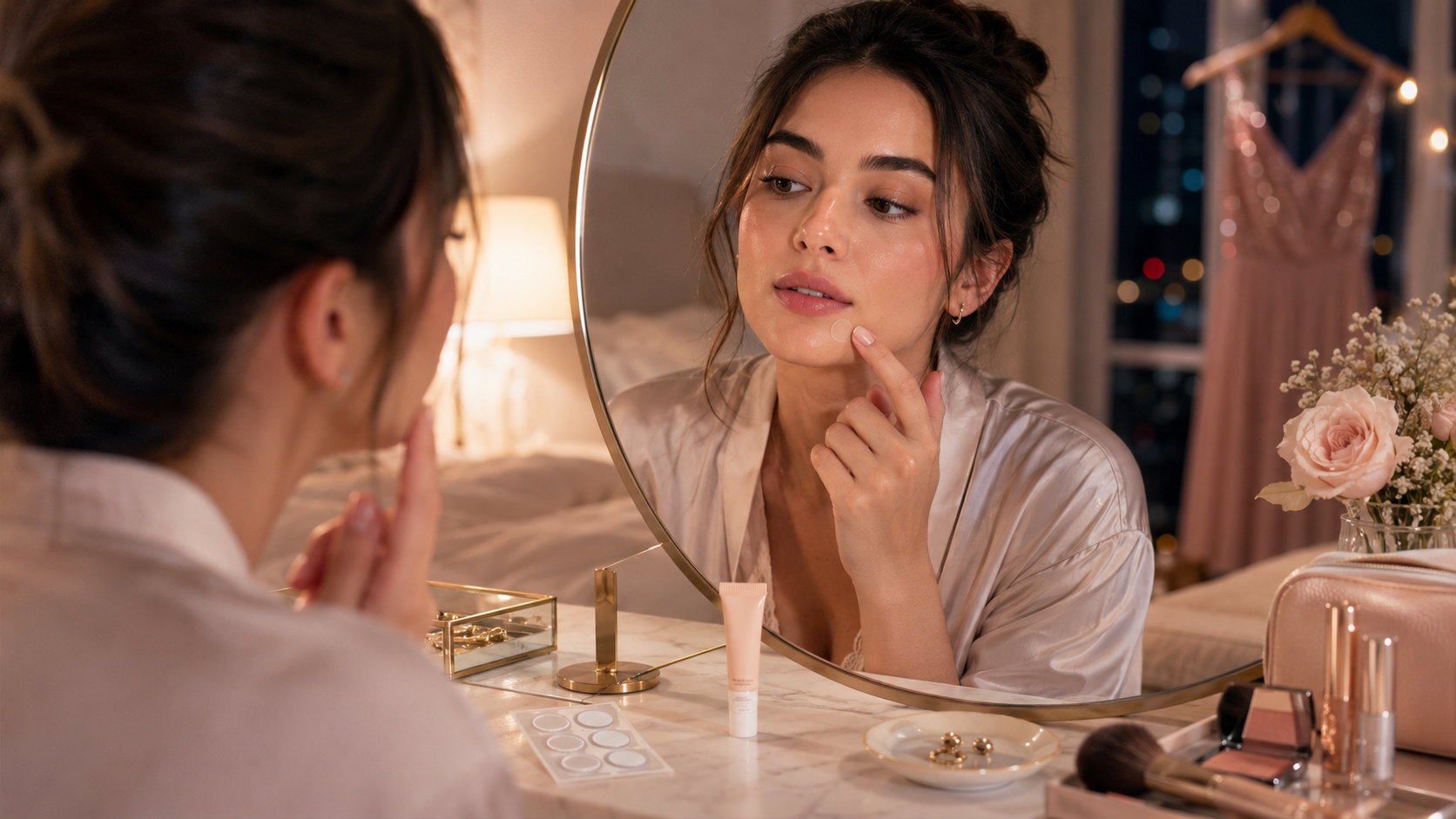
You have the outfit ready. Your hair appointment is booked. You finally decided what makeup look you want.
Then, the night before the event, you notice it.
A bright, swollen pimple sitting exactly where concealer will struggle to hide it.
Whether you have a wedding, birthday dinner, vacation, date, photoshoot, interview, graduation, or important meeting tomorrow, a surprise breakout can feel much bigger than it actually is. The temptation is to panic, squeeze it, scrub it, or apply every strong skincare product you own.
That is usually when a manageable blemish becomes redder, angrier, harder to cover, and more noticeable.
Your goal tonight is not to perform an aggressive skin transformation. It is to protect the blemish, reduce the temptation to touch it, and give the right type of spot treatment time to work.
For a visible pimple that has formed a head or is beginning to surface, my recommended emergency product is the Peace Out Salicylic Acid & Hydrocolloid Acne Healing Pimple Patch, available at Sephora.
Unlike a plain hydrocolloid sticker, this patch combines hydrocolloid technology with acne-targeting ingredients in one simple overnight treatment. Sephora describes it as a patch designed to minimize the appearance of pimples overnight.
Here is exactly how to use it, what results to expect, and what not to do when you wake up with an event on your calendar.

What Should You Do When a Pimple Appears Before an Event?
The first thing you should do is leave it alone.
Do not squeeze it to “get everything out.” Do not repeatedly touch it to see whether it feels smaller. Do not scrub the area, pick at the surface, or try multiple new treatments in the same evening.
Picking and squeezing may make acne take longer to clear and can increase the chance of scarring or post-inflammatory dark marks. The American Academy of Dermatology recommends keeping your hands off breakouts and using gentle skincare instead of irritating scrubs, astringents, and harsh exfoliation.
Your emergency routine should be simple:
- Gently cleanse your face.
- Pat the skin completely dry.
- Apply one appropriate targeted treatment.
- Leave the area alone overnight.
- Keep the rest of your routine calm and familiar.
This is not the night to test a peel, scrub, high-strength acid, new retinoid, drying mask, or viral skincare hack.
More treatment does not always mean faster treatment. In many cases, it simply means more irritation to cover tomorrow.
What Is the Best Overnight Pimple Patch?
The product I would keep in an emergency beauty kit is the Peace Out Salicylic Acid & Hydrocolloid Acne Healing Pimple Patch.
This patch is especially appealing before an event because it combines two strategies in one product:
Hydrocolloid technology helps cover and protect the blemish while absorbing fluid from a surface-level pimple.
Acne-targeting ingredients, including salicylic acid, are incorporated into the patch rather than requiring you to layer a separate liquid spot treatment underneath it.
Sephora currently describes the product as a patented acne patch that combines hydrocolloid polymer technology with active ingredients to minimize the appearance of pimples overnight. The product is sold in 20- and 40-patch options.
That combination is what makes it more useful for this emergency routine than applying a basic sticker over a random serum.
You are not trying to build a complicated acne routine the night before your event. You need something targeted, contained, easy to apply, and difficult to interfere with while you sleep.
The patch also creates a physical barrier between your fingers and the blemish, which may be just as valuable as the treatment itself when you are anxious and tempted to pick.
Recommended product: Peace Out Salicylic Acid & Hydrocolloid Acne Healing Pimple Patches at Sephora.
How Do Hydrocolloid Pimple Patches Work Overnight?
Hydrocolloid materials absorb moisture and form a gel as they collect fluid. They were originally developed for wound-care applications, where the material helps maintain a protected environment over the affected area.
When used on the right kind of blemish, a hydrocolloid acne patch may help absorb visible fluid while covering the pimple and shielding it from fingers, friction, and unnecessary products.
This is why hydrocolloid patches tend to be most satisfying on:
- Whiteheads
- Surface-level pustules
- Pimples that have visibly come to a head
- Blemishes that have already released a small amount of fluid
- Spots you keep touching or picking
The patch may turn white or cloudy as it absorbs moisture. That does not mean the patch is “pulling the entire pimple out by the root.” It means the hydrocolloid material has absorbed fluid.
That distinction matters because no patch can guarantee that every breakout will disappear in one night.
A deep, painful bump underneath the skin may not contain surface fluid for the patch to absorb. A patch can still discourage touching, but it may not flatten a deep blemish as dramatically as it can a formed whitehead.
How Do You Apply a Pimple Patch Correctly?
Applying the patch correctly makes a major difference.
Start by gently cleansing the skin with a mild, non-abrasive cleanser. The American Academy of Dermatology recommends using fingertips rather than rough washcloths, sponges, or scrubbing tools that may increase irritation.
Then follow these steps:
1. Dry the skin completely
The patch needs clean, dry skin to adhere properly. Do not apply moisturizer, facial oil, serum, or spot cream underneath the patch unless the product directions specifically tell you to do so.
Layering a liquid treatment beneath a hydrocolloid patch can interfere with adhesion and may create unnecessary irritation.
2. Choose a patch that fully covers the blemish
The center of the patch should sit directly over the pimple, with enough adhesive surrounding it to create a secure seal.
3. Press it down gently
Use clean hands and press the edges into place. Avoid repeatedly lifting and repositioning the patch.
4. Leave it on according to the package directions
Apply it before bed and allow it to remain undisturbed for the recommended wear time.
5. Remove it slowly
In the morning, peel it away gently instead of pulling quickly. Cleanse the area if needed, then apply a simple moisturizer and sunscreen.
Do not immediately squeeze the blemish after removing the patch. If the pimple is flatter but still visible, let it continue to calm down.
Can You Put Salicylic Acid Under a Hydrocolloid Patch?
You may see advice online suggesting that you apply salicylic acid, benzoyl peroxide, tea tree oil, sulfur, toothpaste, or another strong spot treatment before covering everything with a patch.
That does not automatically make the treatment more effective.
Applying multiple active products under an occlusive patch may increase irritation, especially if you have sensitive skin, use prescription acne treatments, or already applied exfoliating ingredients elsewhere in your routine.
This is another reason the Peace Out patch fits the “one emergency product” approach. The patch already combines hydrocolloid technology with acne-targeting actives, so you do not need to invent a stronger homemade combination.
Use the product as directed instead of turning it into a skincare experiment.
If your skin is sensitive to salicylic acid, adhesives, retinoids, or active acne treatments, review the full ingredient list and patch-test when appropriate. Stop using the product if you experience significant burning, swelling, blistering, or worsening irritation.
How Can You Make a Pimple Look Better by Tomorrow?
No responsible product recommendation should promise to erase every pimple overnight.
What you can realistically aim for is a blemish that appears:
- Less raised
- Less wet or congested at the surface
- Better protected
- Less irritated from touching
- Easier to conceal
- Less likely to be picked before the event
Your morning routine matters too.
After removing the patch:
- Wash your face gently.
- Apply a lightweight moisturizer.
- Use a non-comedogenic broad-spectrum sunscreen.
- Give skincare time to settle before applying makeup.
- Use thin layers of complexion products rather than a heavy mound of concealer.
If the blemish is still red, a tiny amount of green color corrector beneath concealer may help visually neutralize redness. Keep the layers thin so makeup does not become cakey around the raised area.
Avoid putting another aggressive spot treatment beneath makeup. It may cause dryness, pilling, cracking, or visible texture as the day continues.
A calm blemish with light makeup usually photographs better than an irritated, peeling blemish covered by several thick layers.
What Should You Never Put on a Pimple Before an Event?
Urgency makes bad skincare advice sound convincing.
Skip the following:
Toothpaste
Toothpaste is designed for teeth, not facial skin. It may leave the area dry, irritated, or inflamed without treating the breakout appropriately.
Rubbing alcohol
Over-drying the surface does not remove the deeper cause of a blemish. It may weaken the skin barrier and make the area more difficult to conceal.
Undiluted essential oils
Strong essential oils may cause irritation or sensitivity, particularly when applied directly to an inflamed spot.
Multiple exfoliating acids
Combining salicylic acid, glycolic acid, lactic acid, retinol, scrubs, and peels in one evening is more likely to create irritation than flawless skin.
Repeated squeezing
Picking can prolong the breakout and increase the possibility of scarring and dark marks.
A brand-new facial treatment
Do not schedule an aggressive peel, extraction session, resurfacing treatment, or unfamiliar facial immediately before an important event unless you already understand exactly how your skin responds.
The night before an event is the time to protect your skin, not challenge it.
What If the Pimple Is Deep, Painful, or Keeps Coming Back?
A hydrocolloid patch is not the right solution for every type of breakout.
A deep, painful bump without a visible head may be a nodule or cyst-like lesion beneath the skin. Because there may be little surface fluid to absorb, a traditional hydrocolloid patch may have a limited visible effect.
Do not repeatedly press, puncture, or squeeze a deep blemish.
Use a cool compress for comfort, keep your routine gentle, and consider seeing a board-certified dermatologist if the breakout is severe, painful, persistent, or frequently recurring. Acne treatment should be selected according to the type and severity of the blemishes, not just how urgently you want them gone.
Seek professional care if you notice:
- Repeated deep or painful breakouts
- Widespread inflammation
- Scarring
- Significant dark marks
- Sudden acne that is unusual for you
- A spot that does not behave like a typical pimple
- Signs of infection
- Breakouts that do not improve with consistent care
An emergency patch can help with an occasional surface blemish. It is not a replacement for a complete acne treatment plan.
The Overnight Breakout Plan to Remember
When a random pimple appears before an important event, do less, not more.
Gently cleanse the skin, dry it completely, apply one targeted patch, and leave the blemish alone.
The Peace Out Salicylic Acid & Hydrocolloid Acne Healing Pimple Patch stands out because it combines the protective, fluid-absorbing benefits of hydrocolloid technology with acne-targeting ingredients in one easy step.
It cannot guarantee completely clear skin by morning, but it may help make the right kind of surface-level blemish look calmer, flatter, and easier to conceal while protecting it from the most common emergency skincare mistake: your own fingers.
Keep a pack in your bathroom, travel bag, or event-prep kit.
Because surprise breakouts rarely check your calendar before appearing.
This article may contain an affiliate link. If you purchase through it, I may earn a commission at no additional cost to you.


