
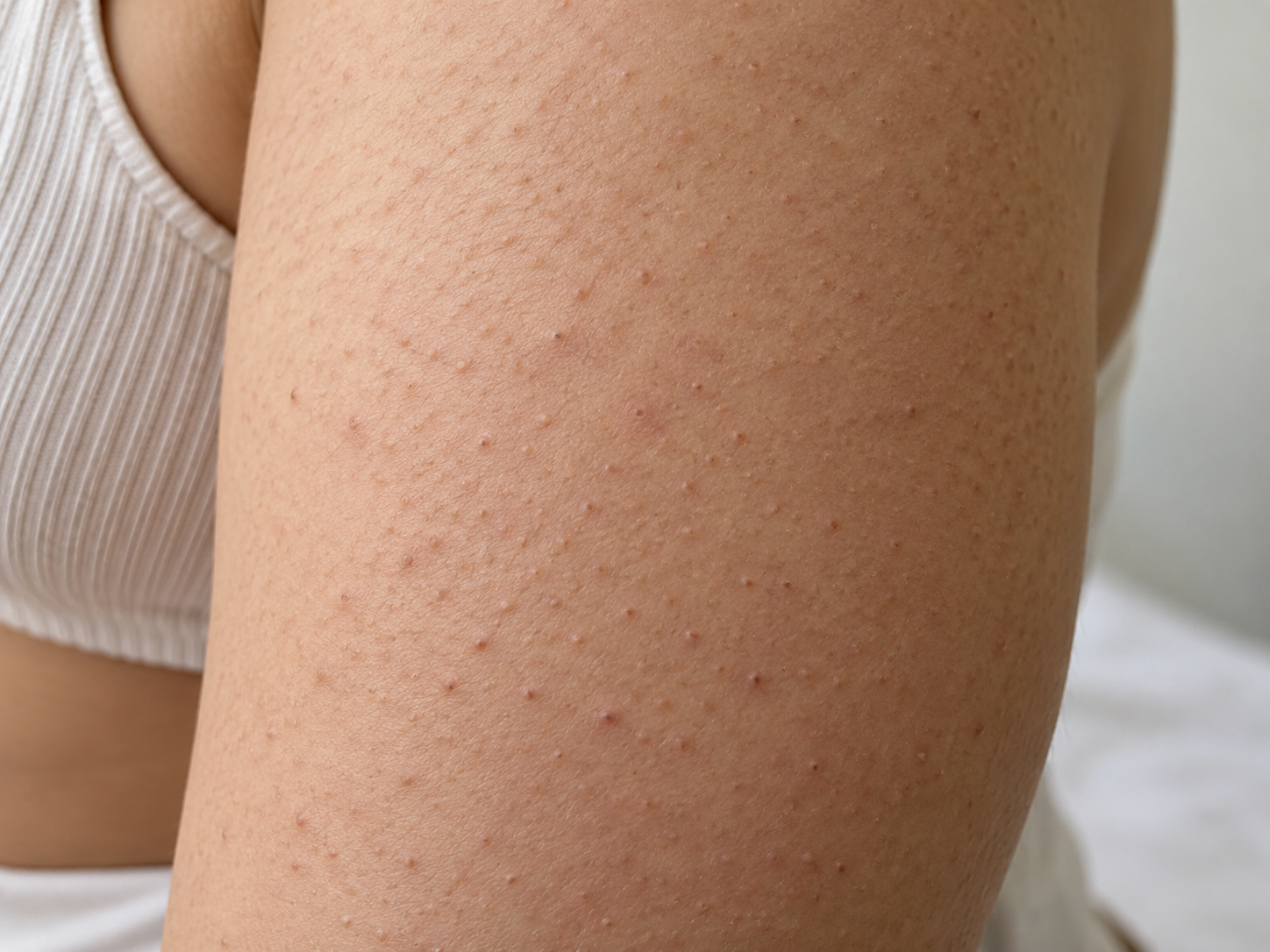
If the backs of your arms or thighs feel like sandpaper, you may have encountered keratosis pilaris (KP). The tiny bumps can look like goosebumps that never disappear. Although KP is common and harmless, it can be persistent. The right body-care routine aims to improve comfort and texture, not to promise perfectly smooth skin overnight.
What is keratosis pilaris?
Keratosis pilaris occurs when keratin builds up and plugs openings around hair follicles. It commonly affects upper arms, thighs and sometimes buttocks or cheeks. Dry air may make the bumps more noticeable. It is not contagious, and it isn’t caused by a failure to wash properly.
How KP looks on different skin tones
The bumps can be flesh-colored, red, pink or darker brown depending on your natural pigmentation. Picking or repeatedly irritating the skin may produce additional dark marks, especially in skin that develops post-inflammatory hyperpigmentation easily. A realistic goal is a gradual reduction in roughness without increasing irritation.
KP, strawberry legs or folliculitis: what’s the difference?
Strawberry legs describes the appearance of dark dots around follicles, sometimes after shaving. It isn’t one medical diagnosis. KP involves numerous small keratin plugs and tends to produce persistent roughness. Folliculitis can cause inflamed, tender or pus-filled bumps. If bumps are painful, rapidly spreading, draining or accompanied by other symptoms, ask a clinician to evaluate them rather than assuming KP.
Why scrubbing harder usually backfires
Rough brushes, gritty body scrubs and forceful exfoliation can irritate follicular skin. They may temporarily change how the surface feels, but won’t eliminate the tendency to form plugs. Inflammatory irritation can make skin look redder or leave more pigmentation. Consistent moisturizing and carefully selected exfoliating ingredients generally make more sense than aggressive treatment.
Ingredients that may help smooth bumpy skin
Urea
Urea acts as a humectant, helping skin hold moisture. At some concentrations, it also softens rough keratin buildup. Concentrations and supporting ingredients vary between products, so always read the specific bottle rather than assuming all versions of a brand’s lotion are identical. Avoid applying a treatment that stings to freshly shaved or cracked skin.
Lactic acid
Lactic acid is an alpha hydroxy acid that loosens surface dead skin cells. It is used in some exfoliating body lotions for rough texture. It may sting sensitive skin and can increase sun sensitivity, making product-label sunscreen directions important.
Do you need several exfoliating products?
No. You can try one exfoliating moisturizer at a time and observe how your skin responds over several weeks. Using multiple acids, abrasive mitts and exfoliating lotions together may increase discomfort instead of speeding results.
Two specific lotions worth considering
Eucerin Roughness Relief Lotion
This is a body-care option marketed for dry, rough skin. Read the formulation and usage instructions for the exact item you purchase. It is intended as skincare support, not a cure for every skin bump. View Eucerin Roughness Relief Lotion.
AmLactin Daily Nourish 12% Lactic Acid Lotion
This lotion uses lactic acid to exfoliate while moisturizing. It may help soften rough-feeling skin with consistent use, but does not guarantee the condition will disappear. Follow the package’s application guidance and sun precautions. Avoid applying to irritated or broken skin. View AmLactin Daily Nourish Lotion.
Affiliate disclosure: Product links may earn us a commission if you purchase, at no additional cost to you.
A practical morning and evening KP routine
During your shower
- Choose lukewarm water instead of a long hot shower.
- Wash with a gentle body cleanser.
- Skip harsh brushes, abrasive scrubs and picking.
After your shower
- Pat skin dry, leaving it slightly damp.
- Apply your selected moisturizer or smoothing lotion as directed.
- Use broad-spectrum SPF 30 or higher on exposed areas and follow extra sun precautions for acids.
At night
If you are using a treatment lotion, don’t automatically reapply it several times a day. Follow the label. Use a plain moisturizer instead if the area feels irritated. Keeping a routine simple makes it easier to judge what is helping.
Does shaving make KP worse?
Shaving can irritate bumps for some people, particularly when done over dry or already inflamed skin. Use a gentle hair-removal approach and avoid applying exfoliating acids immediately to sensitized areas. If shaving repeatedly causes inflammation, it may be worth discussing alternative methods with a qualified professional.
How quickly can texture improve?
Changes are gradual, and it can take several weeks to tell whether your skin tolerates and benefits from a routine. KP can return after treatment stops. If an area becomes painful, inflamed or doesn’t behave like ordinary KP, a dermatologist can confirm the diagnosis and discuss other options.
Frequently asked questions
Can keratosis pilaris be cured permanently?
There is no guaranteed permanent cure. Many people manage it with ongoing moisturizing and gentle treatments.
Is KP acne?
No. Both involve follicles, but KP is distinct from acne.
Is a body scrub necessary?
No. Aggressive physical exfoliation can aggravate rough or sensitive skin.
Should I use Eucerin and AmLactin together?
Usually there is no need to start two smoothing lotions together. Try one product and assess tolerance.
More body-care reading
Learn about bumpy skin that isn’t acne, dark dots on legs after shaving and bumps on the buttocks.
Skincare education only. See the American Academy of Dermatology’s keratosis pilaris self-care guidance.


