
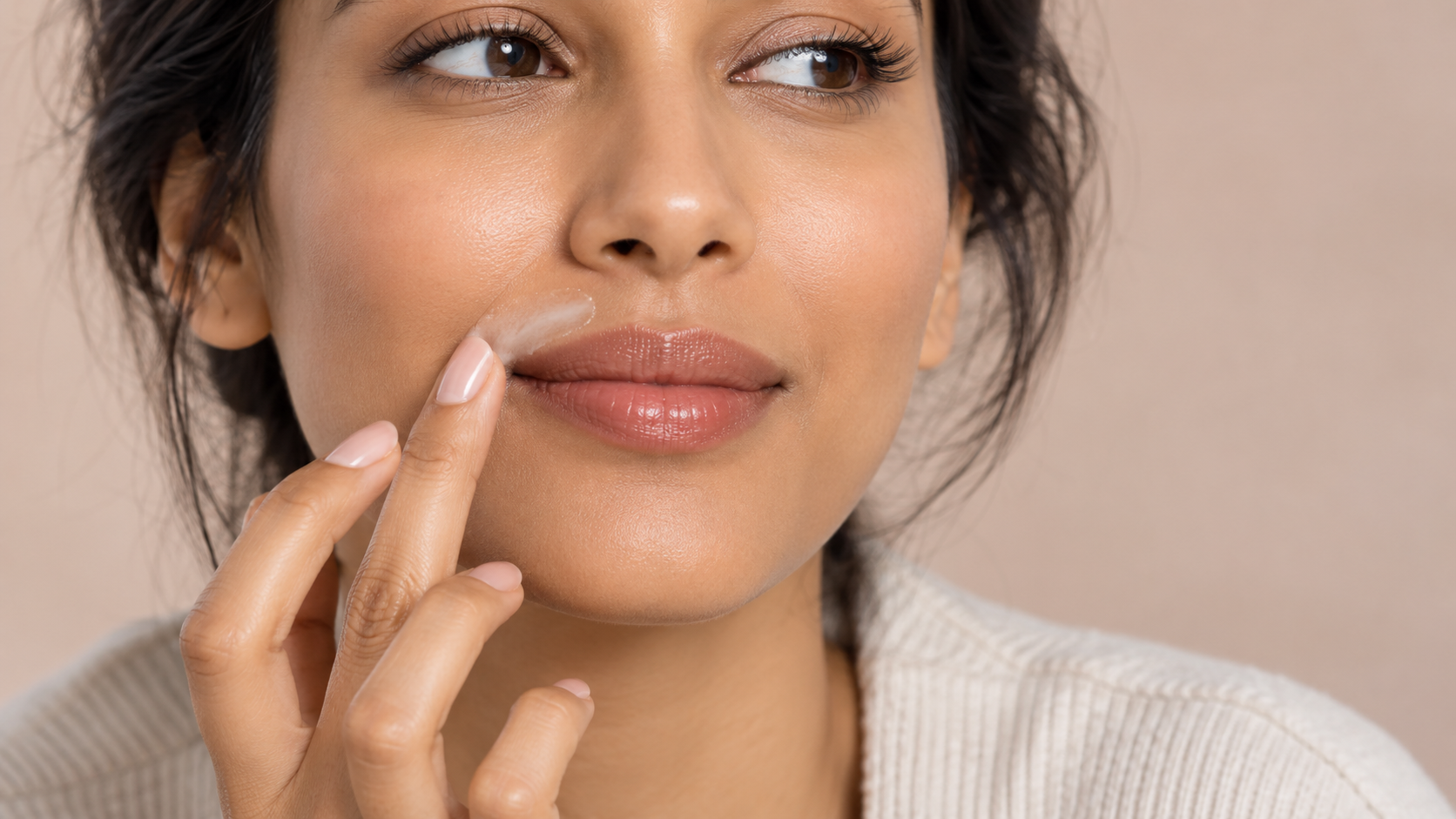
You do your skincare, your cheeks look even, your forehead looks fine, and then the area around your mouth seems noticeably darker.
Uneven-looking tone around the mouth can stand out because the skin there moves constantly, gets wiped often and comes into contact with toothpaste, lip products, food, saliva and skincare.
If the area also feels dry, irritated or rough, the first step is not necessarily a stronger brightening product.
Why can the skin around your mouth look darker?
1. Repeated irritation
The skin around the mouth is constantly exposed to wiping, rubbing and products. Even mild irritation repeated every day can make the area look uneven over time.
2. Dryness
Dry skin can look dull and deeper in tone, especially around the corners of the mouth. If the area feels tight or flaky, improving hydration may help it look more even.
3. Toothpaste and lip products
Some people notice irritation from strongly flavored toothpaste, fragranced lip products or products that migrate onto the skin around the mouth. If the area repeatedly stings or feels dry after using something, pay attention to that pattern.
4. Picking or rubbing
Rubbing dry skin, picking at small bumps or constantly wiping the area can keep irritation going longer than you realize.
5. Leftover marks after breakouts
Small pimples around the mouth can leave behind dark marks even after the breakout itself is gone.
If that sounds familiar, read The Pimple Is Gone, So Why Is the Dark Spot Still There?.
What should you change first?
Before adding stronger products, simplify the area for a little while.
- use a gentle cleanser
- moisturize consistently
- avoid scrubbing the area
- watch for products that sting or leave the skin feeling tight
- avoid picking at bumps or dry patches
- use sun protection during the day
Can exfoliation help?
Gentle exfoliation may help if rough texture and buildup are part of the problem, but the skin around the mouth can be sensitive. Using strong acids too often can easily create more irritation.
If you use an exfoliating product, introduce it slowly and stop if the area starts burning, peeling or feeling unusually sensitive.
What about brightening ingredients?
Once the skin feels calm, ingredients such as niacinamide, azelaic acid, alpha arbutin and licorice root extract are commonly used in routines for uneven-looking tone.
You do not need to layer several brightening products at once. Consistency usually matters more than using the strongest routine possible.
If your dark spots are not fading even though you are using brightening products, read Why Your Dark Spots Aren’t Fading Even Though You’re Using Brightening Products.
When should you have it checked?
If the discoloration appeared suddenly, is spreading quickly, is painful, itchy or accompanied by other skin changes, consider checking in with a healthcare professional or dermatologist.
The bottom line
If the skin around your mouth looks darker, first look for irritation, dryness and repeated rubbing before reaching for a stronger treatment.
Calm the area, keep the routine simple and then work on uneven-looking tone gradually.
You can also use the Dark Spot & Hyperpigmentation Routine Calculator to help organize your routine.


