
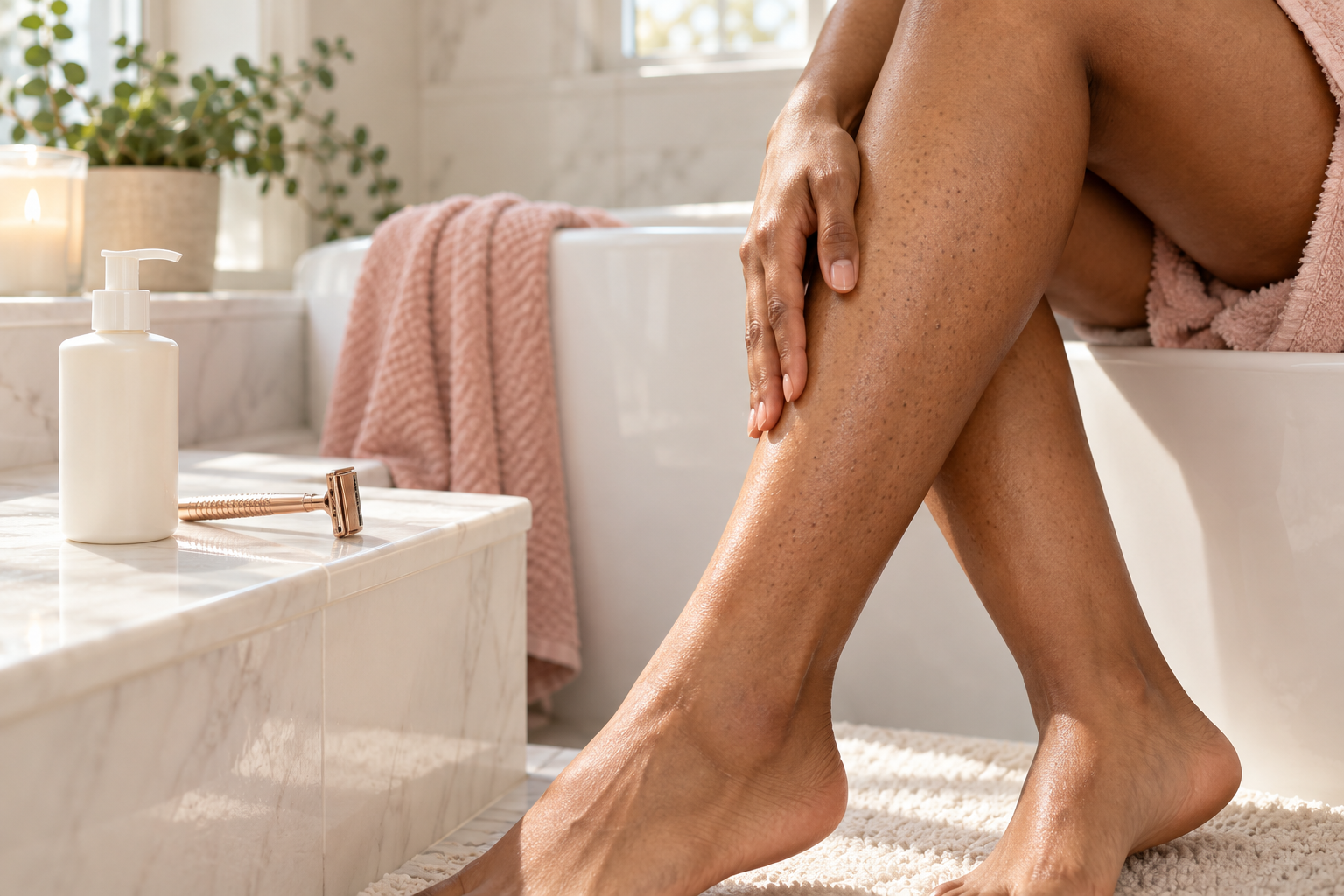
You shave for smooth skin, then find yourself dealing with bumps, tenderness, and marks that last longer than the stubble. The obvious response might seem to be a stronger scrub, but more friction can make irritated skin feel worse.
Preventing ingrown hairs starts with understanding what the bumps are and how hair removal contributes. Products can have a supporting role, but they can’t compensate for repeatedly shaving irritated skin or digging at trapped hairs.
This guide focuses on ordinary external body skin, such as the legs. Products discussed here aren’t recommendations for genital, mucosal, broken, or freshly irritated skin.
As an Amazon Associate I earn from qualifying purchases. If you shop through affiliate links in this post, iGlamorBar may earn a commission at no additional cost to you.
Ingrown hair, razor burn, or something else?
An ingrown hair grows back into the skin instead of emerging normally. The skin can react with a small inflamed bump. Curved hairs can be more prone to re-entering the skin, although anyone can develop ingrowns.
Razor burn describes irritation after shaving and may feel more like a widespread sting or irritated patch than a single trapped hair. Folliculitis involves inflammation of hair follicles and can have several causes. Acne, keratosis pilaris, and other conditions can also create bumps.
You don’t have to diagnose each bump yourself, but the distinction matters. A painful, worsening, pus-filled area shouldn’t be treated as a simple exfoliation problem. Repeated deep lumps or scarring need an assessment.
Change the shaving habits that keep repeating the problem
A very close shave can leave hair in a position where it is more likely to re-enter the skin. Stretching skin taut and repeatedly passing over one area can add irritation.
Use a lubricating shaving product and shave with the direction of growth rather than chasing the closest possible result. Prepare hair with water, use a clean, sharp razor, and avoid repeated strokes over the same spot. Depending on your hair and skin, an electric option that doesn’t cut as close may be worth considering.
If shaving repeatedly triggers inflamed bumps, taking a break from the method can be more useful than adding another product. A dermatologist can help you evaluate alternatives when the problem is persistent.
Why picking can leave a longer-lasting mark
A bump may make you want to dig until you can see a hair. That creates additional injury and can contribute to infection, pigment changes, or scarring.
A dark mark after the bump has settled is also a different concern from an active ingrown. Continuing to scrub an old mark as though a hair is still trapped can keep the area irritated. Let the condition of the skin guide what you do next rather than treating every visible mark as a bump that needs extracting.
Where exfoliation may fit
Exfoliating ingredients can help with surface buildup and roughness. Salicylic acid is commonly found in products for bumpy or congested skin. But a rinse-off body wash and a leave-on body exfoliant have different exposure times and aren’t equivalent steps.
Introduce one option, not several. Avoid applying acids to cuts, irritated skin, or immediately after hair removal when the skin is tender. Follow the product label and any provider’s aftercare instructions; there isn’t one universal waiting period for every removal method and formula.
Rinse-off option: CeraVe SA Body Wash for Rough & Bumpy Skin
CeraVe SA Body Wash for Rough & Bumpy Skin combines salicylic acid with ingredients such as ceramides and niacinamide. It may appeal to someone who wants a rinse-off exfoliating body product for rough areas rather than another leave-on layer.
Its role here is optional texture care on intact external skin. It isn’t a treatment for an infected follicle or a promise that an individual trapped hair will release. It also isn’t a shaving cream. If you use it, avoid adding a second exfoliant automatically just because the wash rinses away.
Leave-on alternative: Paula’s Choice Weightless Body Treatment 2% BHA
Paula’s Choice Weightless Body Treatment 2% BHA is a leave-on salicylic acid body product. It may suit someone who wants to target intact, rough body areas and prefers a lotion format rather than an exfoliating wash.
Because it remains on the skin, think of it as a treatment step, not simply another basic moisturizer. Start according to the product directions and don’t layer it over irritated or freshly shaved skin. It is an alternative to the exfoliating wash, rather than a required second step. Check with a clinician if salicylates aren’t appropriate for you.
Supporting option: CeraVe Moisturizing Cream
CeraVe Moisturizing Cream can serve a different purpose: supporting dry skin with a plain, non-exfoliating cream. It may fit someone whose body skin feels tight and rough and who needs moisture care before considering an acid.
Using a moisturizer doesn’t guarantee prevention of ingrown hairs. Its value is that comfortable skin care is easier to maintain without constantly adding stronger treatments. You may already own a suitable moisturizer, so don’t assume a new product is necessary.
Put the routine together without stacking treatments
On a shaving day, concentrate on gentle preparation, lubrication, sensible technique, and comfortable aftercare. Don’t turn the same session into a scrub, acid treatment, and repeated razor pass.
Between hair-removal sessions, keep ordinary moisturizing care consistent. If your skin is intact and comfortable and you want to try an exfoliating body product, introduce one according to its label. Reduce unnecessary friction from clothing if it bothers the area.
If you receive waxing or another professional service, tell your provider which exfoliants and retinoids you use. Aftercare should account for the treatment and the condition of your skin. A generic product routine shouldn’t override their instructions.
When should a bump be checked?
Seek advice for increasing pain, spreading redness or warmth, drainage, fever, or a bump that isn’t behaving like your usual mild ingrown. On deeper skin tones, warmth, swelling, tenderness, and texture changes may be more apparent than visible redness.
Recurring deep lumps in areas such as the underarms or groin shouldn’t be assumed to be ordinary ingrowns. Establishing the cause is more useful than repeatedly treating them with acids.
Frequently asked questions
Does waxing prevent every ingrown hair?
No. Different removal methods can still be associated with ingrowns. Your individual response and technique matter.
Should I use both exfoliating products?
No. They’re alternative approaches to texture care. Combining them adds exposure before you know whether either is useful for you.
Can I use these products on the bikini line?
This guide doesn’t recommend acids for intimate areas. Follow the specific label and get individualized advice about persistent bumps or irritation there.
What usually happens first in your routine: tenderness right after shaving, bumps as hair returns, or dark marks that remain afterward?
Related reading: How to Stop Ingrown Hairs Before They Turn Into Dark Marks.


