
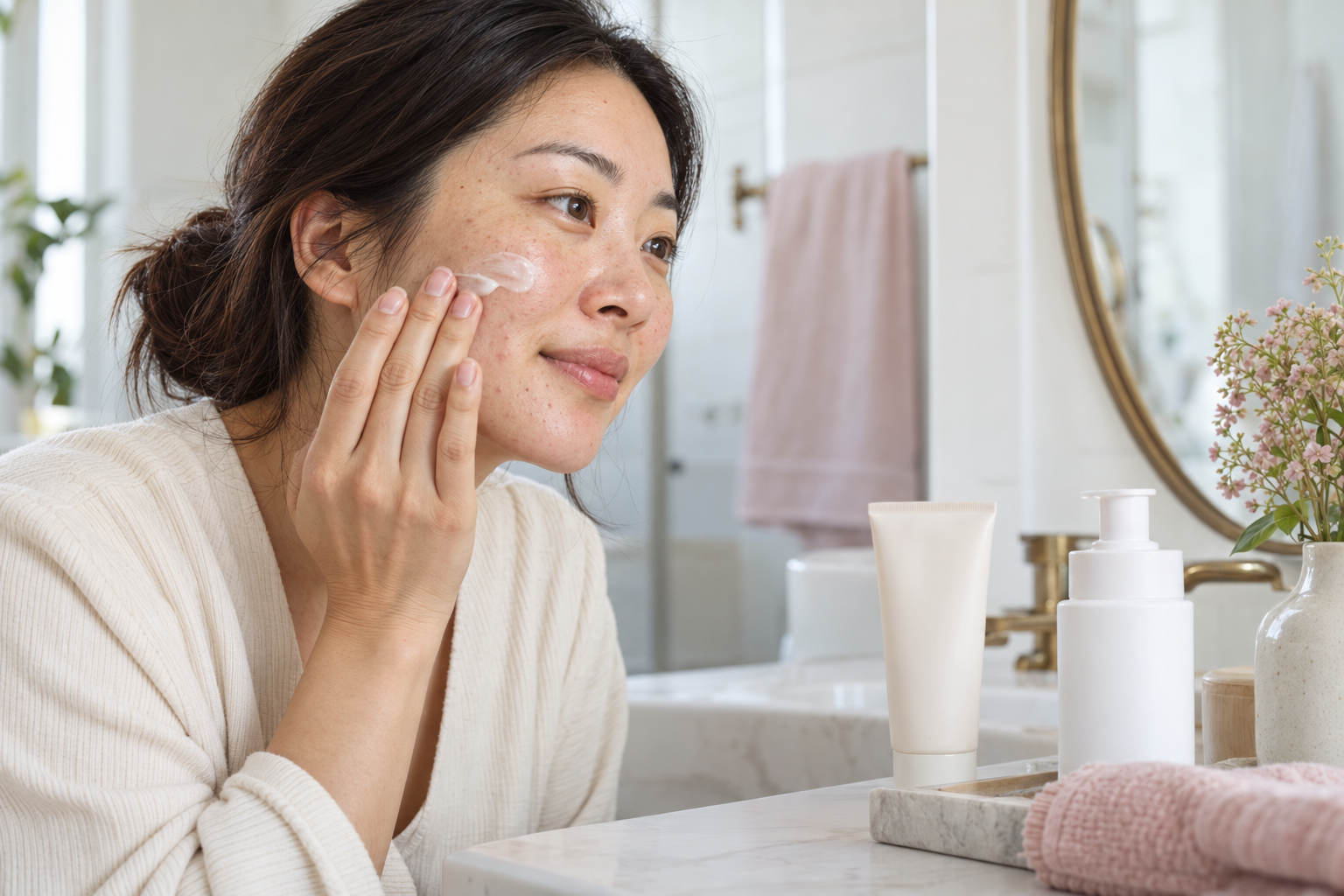
Adult acne can be frustrating in a very specific way: you may be treating blemishes and worrying about dryness or fine lines at the same time. A harsh cleanser seems wrong, but a rich routine feels risky when you’re already breaking out.
The answer isn’t to choose between acne care and comfortable skin. It is to understand which product treats acne and which products help you follow the plan. Once those roles are clear, you can avoid buying several overlapping treatments that leave your face increasingly irritated.
As an Amazon Associate I earn from qualifying purchases. If you shop through affiliate links in this post, iGlamorBar may earn a commission at no additional cost to you.
Start with the kind of breakout you have
Blackheads, whiteheads, and small pimples can fall within mild acne that may respond to nonprescription options. Deep, painful lesions, scarring, or persistent breakouts deserve a dermatologist’s assessment.
Not every bump is acne. An itchy rash or a new eruption that looks different from your usual blemishes may need another approach. Product shopping can’t reliably determine the diagnosis.
Also be cautious about deciding that jawline acne proves a specific hormonal disorder. Pattern and timing are useful information to share with a clinician, but they aren’t enough to establish the cause by themselves.
Understand the difference between treating and supporting
An acne medicine contains an active ingredient intended to treat acne. A basic cleanser removes surface buildup, while moisturizer helps with comfort and moisture support. Sunscreen protects against sun exposure.
A useful routine may contain all those functions without putting acne medication into every bottle. If your wash, toner, serum, and spot treatment are all medicated, the routine may be more intensive than you realize.
Before adding anything, list your products and their active ingredients. A “gentle” product name doesn’t tell you whether the formula also contains salicylic acid or benzoyl peroxide.
Adapalene: a leave-on retinoid acne treatment
Adapalene helps address pore clogging and is used for blackheads, whiteheads, and pimples. It is a medicine, not just another cosmetic serum. Its use should follow the Drug Facts label or your clinician’s instructions.
This category makes more sense as a consistent acne plan than as an emergency product dabbed on a single blemish before an event. Expectations matter: improvement takes time, and using more than directed doesn’t make that process safer or faster.
Product to consider: Differin Gel, adapalene 0.1%
Differin Gel, adapalene 0.1% is a nonprescription retinoid acne treatment. It may suit someone with mild recurring acne who wants to discuss a leave-on treatment rather than repeatedly switching cosmetic products. The OTC label is for ages 12 and older.
It can cause dryness or irritation, and the label describes a treatment period that may extend to three months before results are seen. Follow its directions, avoid doubling up with a cosmetic retinol, and seek guidance if you’re becoming significantly irritated. Retinoids should not be used during pregnancy; discuss alternatives if pregnant or planning pregnancy and seek advice when breastfeeding.
Benzoyl peroxide: another acne-treatment route
Benzoyl peroxide targets acne-associated bacteria and is used for inflammatory blemishes. It comes in different concentrations and formats, including rinse-off washes and leave-on treatments.
The format matters because a wash isn’t used like a cream. It also matters because a higher concentration isn’t automatically the best fit for someone who already struggles with dryness.
Product to consider: PanOxyl Acne Creamy Wash, 4% benzoyl peroxide
PanOxyl Acne Creamy Wash, 4% benzoyl peroxide is a rinse-off treatment option. It may appeal to someone who prefers to keep an acne medicine in the cleansing step rather than adding another leave-on product.
Follow its contact-time, rinsing, and frequency instructions. Benzoyl peroxide can irritate skin and bleach towels, pillowcases, or clothing. This is the 4% Creamy Wash, not the stronger 10% Foaming Wash. You don’t need to begin this and adapalene together simply because both are included here.
Where moisturizer fits when you have acne
An ordinary moisturizer doesn’t treat acne by itself, but it can help reduce dryness associated with treatment. If discomfort keeps you from using a treatment appropriately, supporting moisture care is a practical part of the plan.
Look for a formula suitable for acne-prone skin, with labels such as noncomedogenic. Then judge how it feels. A label can’t guarantee that every person will tolerate a formula or enjoy the same texture.
Product to consider: CeraVe PM Facial Moisturizing Lotion
CeraVe PM Facial Moisturizing Lotion is a lightweight, oil-free moisturizing option with ceramides, hyaluronic acid, and niacinamide. It may suit someone who wants moisture support without a rich body-cream texture.
It contains no sunscreen and isn’t an acne medicine. “PM” doesn’t make it a retinol product either. Think of it as a supporting moisturizer, not a replacement for your chosen treatment or daytime protection.
Choose a manageable starting routine
If you’re beginning nonprescription care, select an appropriate treatment rather than starting several new medicines at once. Follow its instructions and keep the supporting cleanser and moisturizer familiar.
A morning routine might involve a gentle wash, moisturizer when needed, and sunscreen. An evening routine depends on the treatment you’ve selected: a rinse-off medicine belongs in its labeled cleansing step; a leave-on medicine follows its own directions. If a clinician has recommended a combination, follow that plan rather than separating products based on generic internet rules.
Combination acne therapy can be appropriate. The point is to make it deliberate, with guidance about tolerance, rather than accidentally building a combination because multiple products came in one kit.
Measure more than the number of spots today
Track new lesions, discomfort, and your ability to follow the routine. A photograph taken occasionally in similar lighting can be more helpful than close inspection several times a day.
Don’t dismiss every new bump as “purging,” and don’t treat a spreading rash as proof of progress. Contact a clinician about persistent irritation, worsening acne, or scarring. The right plan should be both appropriate for the condition and practical for your life.
Frequently asked questions
Should I buy Differin and PanOxyl together?
They can appear in professional combination plans, but this article isn’t directing every reader to start both. Choose treatment based on your situation, directions, and guidance.
Will moisturizer make my acne worse?
A suitable moisturizer can support acne care. Formula and tolerance matter; feeling oily doesn’t mean you must skip all moisture support.
When should I stop trying store-bought products?
Get help for painful deep lesions, scarring, diagnostic uncertainty, or a routine that isn’t improving the problem as expected. You don’t need to try every brand first.
Which would make your routine easier to follow: one clear treatment choice, a gentler cleanser, or a moisturizer you actually like using?
Related reading: Adult Acne Around Your Chin and Jawline: Causes and What to Try.


