
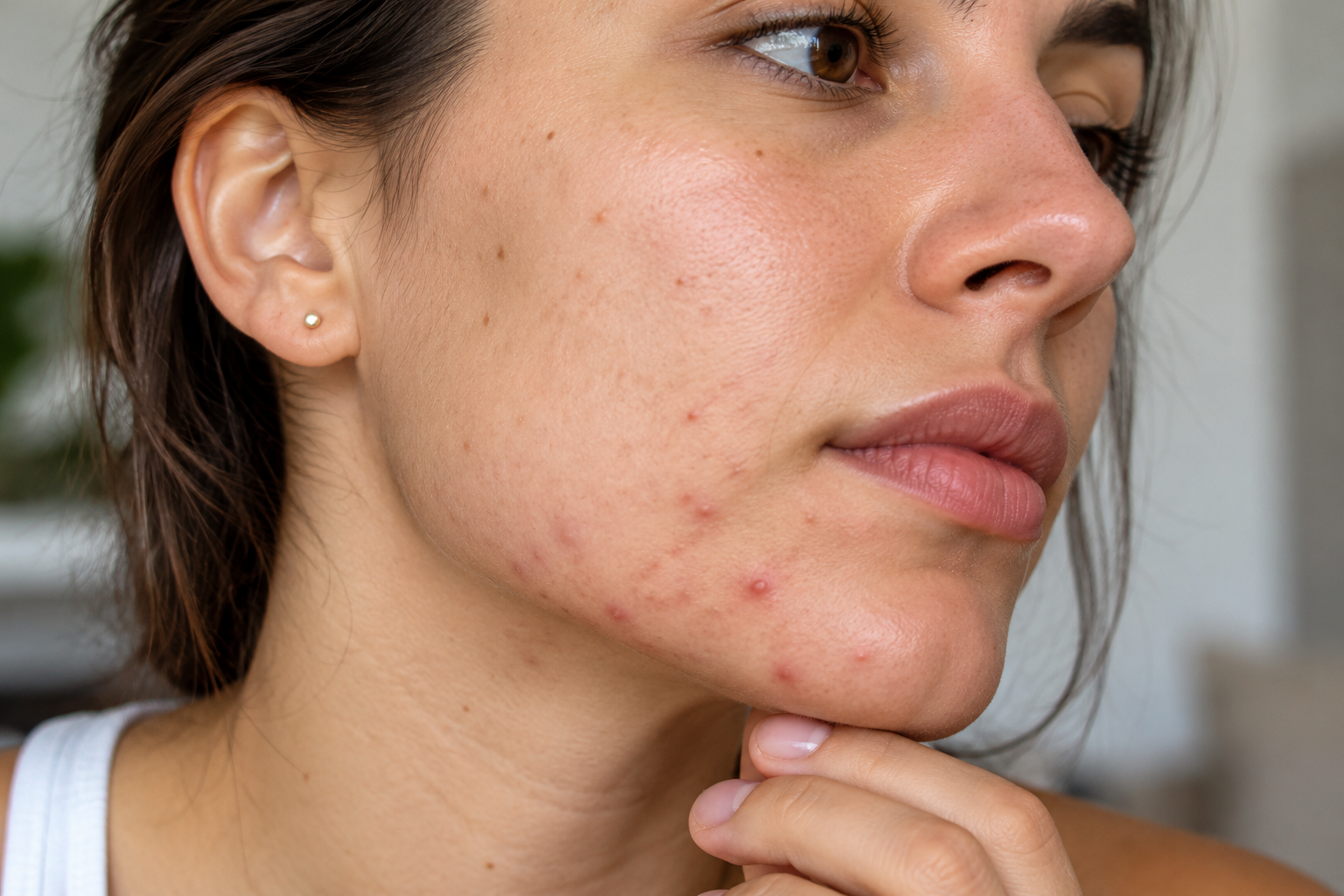
Adult acne around the chin and jawline is frustrating, especially when breakouts keep returning despite expensive skincare. The good news is that a practical routine can help many mild breakouts. The tricky part is identifying what type of lesions you have, choosing an appropriate treatment, and giving it time to work.
Why does acne appear on the chin and jawline?
Acne develops when follicles become clogged with oil and dead skin cells, sometimes followed by inflammation. Hormonal fluctuations can influence oil production, which is why some adults notice cyclical breakouts. But the location of a pimple alone does not prove a hormone imbalance. Genetics, skin products, friction, stress and some medications can also contribute.
Is adult jawline acne always hormonal?
No. Persistent or deep lower-face blemishes may be associated with hormonal factors, but diagnosis requires more than a breakout map. If new acne appears with irregular periods, unexpected facial hair growth or scalp hair thinning, mention those symptoms to a healthcare professional. For many people, the immediate priority remains a well-tolerated acne routine.
Could it be something other than acne?
Small red bumps around the mouth with flaking or burning could represent perioral dermatitis. Itchy, uniform bumps may have other explanations. If you are unsure, avoid treating every facial bump as acne; a dermatologist can distinguish overlapping conditions.
Know what type of breakout you’re treating
Blackheads and whiteheads are clogged follicles, while papules and pustules are inflamed lesions. Deep nodules or cysts can be painful and more likely to scar. Over-the-counter skincare is not always enough for deep, recurring lesions. Picking or squeezing increases the chance of discoloration and scarring, particularly in skin prone to post-inflammatory hyperpigmentation.
Morning skincare routine for adult acne
- Cleanse gently. Use lukewarm water and fingertips. A benzoyl peroxide wash can be considered for appropriate acne-prone skin, but follow its instructions and stop if severe irritation occurs.
- Moisturize. Choose a non-comedogenic formula. Skipping moisture because your skin is oily can make a treatment routine harder to tolerate.
- Protect from UV exposure. Finish with broad-spectrum SPF 30 or higher and reapply as directed, especially outdoors. This also helps prevent lingering acne marks from looking darker.
Evening routine: focus on consistency
- Remove sunscreen and makeup without harsh scrubbing.
- If appropriate, apply an acne treatment such as adapalene as directed on the package. It is a maintenance treatment, not a one-night spot fix.
- Apply moisturizer to keep your routine comfortable. Avoid combining several acids, scrubs and retinoids without professional guidance.
Give a consistent routine several weeks before judging results. If your skin becomes persistently red, cracked or uncomfortable, stop the irritating product and get advice rather than adding another active.
Recommended acne products: what each actually does
CeraVe Acne Foaming Cream Cleanser, 4% benzoyl peroxide
Benzoyl peroxide helps reduce acne-associated bacteria and is often useful for inflamed breakouts. This rinse-off treatment may be easier for some users to incorporate than a leave-on formula, although it can still dry or irritate skin. Keep it away from eyes, and remember that benzoyl peroxide can bleach towels and clothing. View CeraVe Acne Foaming Cream Cleanser.
Differin Gel, adapalene 0.1%
Adapalene is an over-the-counter topical retinoid used to help prevent clogged follicles and treat acne over time. It can cause dryness, peeling and irritation, especially when treatment begins. Follow the label carefully, protect your skin from the sun and avoid use during pregnancy; consult a healthcare professional if planning pregnancy or breastfeeding. View Differin Gel 0.1%.
Should you use both at the same time?
Some acne regimens include both ingredients, but introducing multiple treatments immediately may increase irritation. Start with a basic routine, introduce one active at a time and follow package directions. If you have sensitive skin, are taking prescription treatments or are unsure about combining products, ask a dermatologist or pharmacist.
Disclosure: This article contains affiliate links. We may earn a commission on qualifying purchases at no extra cost to you.
Common acne-care mistakes to avoid
- Scrubbing aggressively to “clean out” pores.
- Picking deep bumps or using extraction tools at home.
- Adding multiple treatments every few days.
- Using very heavy hair products that repeatedly contact the jaw.
- Skipping sunscreen when treating acne marks.
- Expecting products to erase permanent scarring.
How long before you notice improvement?
Acne treatments often require several weeks of steady use. One useful way to evaluate progress is whether fewer new pimples form and inflammation settles, rather than whether every old mark has disappeared. If you are seeing new scars, severe pain or no progress after a reasonable treatment period, seek professional advice. Prescription options may be better suited for persistent or nodular acne.
What if pimples leave dark marks?
Post-inflammatory hyperpigmentation may linger after the pimple itself is gone. Treating the underlying acne helps prevent new spots. Daily sun protection and a non-irritating routine matter; over-exfoliation can make irritation-related marks worse. Read more about why dark spots remain after breakouts.
Frequently asked questions
Does chin acne prove my hormones are imbalanced?
No. Its location can suggest a pattern, but cannot identify the cause by itself.
Can adults use adapalene?
Adapalene is used for acne in eligible users, but follow its product labeling and pregnancy precautions.
Do I need to stop moisturizing oily skin?
No. A suitable moisturizer can reduce treatment-related dryness without needing to feel heavy.
When should I see a dermatologist?
Seek assessment for painful deep acne, scarring, persistent breakouts or an uncertain diagnosis.
More skincare guidance
Explore why pores look noticeable, skin barrier care and how to manage persistently dry skin.
This article is for skincare education, not diagnosis or medical treatment. Source: American Academy of Dermatology, adult acne treatment.


