
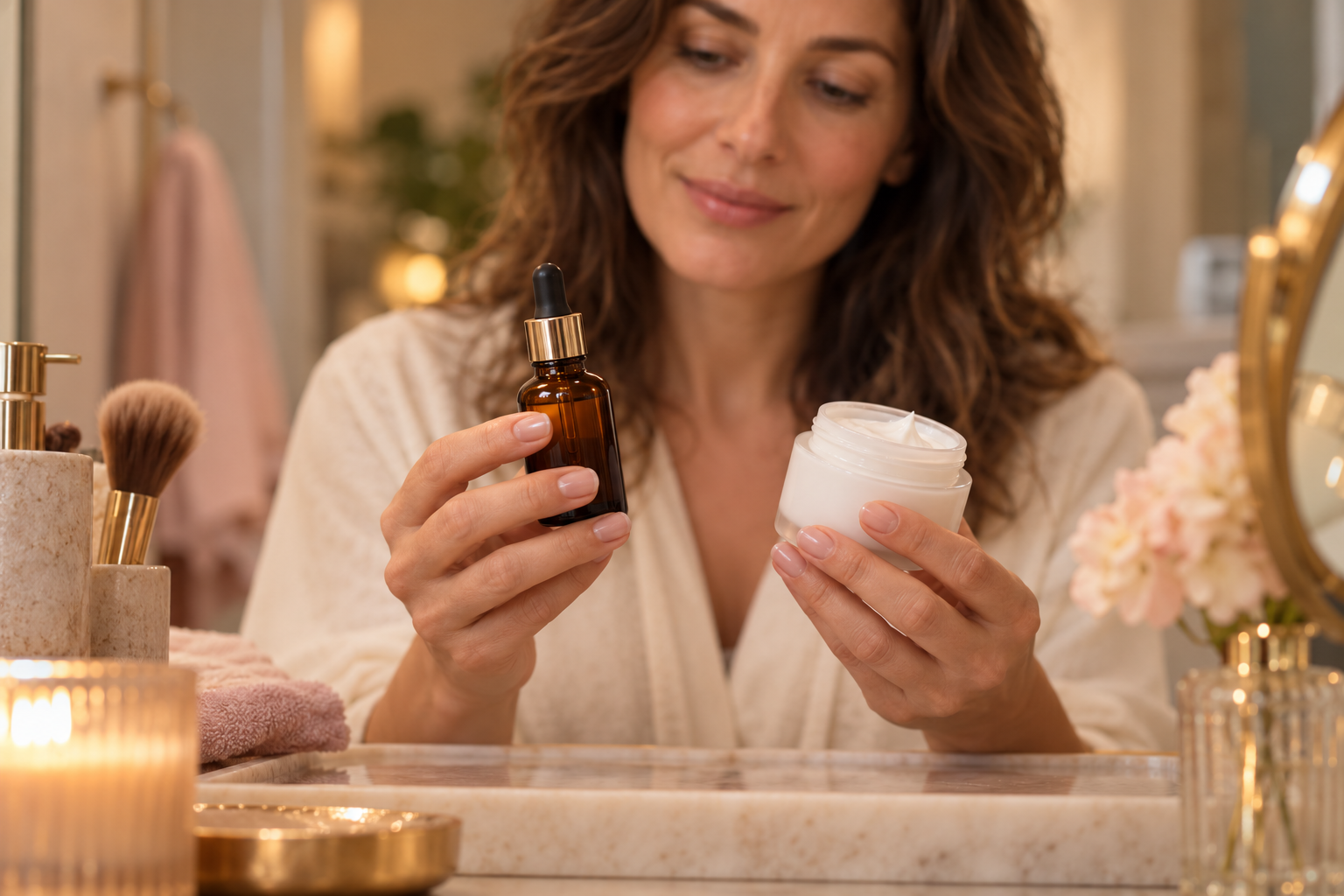
Shopping for retinol can feel like a test you haven’t studied for. One bottle promises smoother texture, another targets wrinkles, and a third highlights a percentage that sounds stronger than everything else.
A more useful starting point is the concern you want to address and the kind of routine you’ll actually follow. A serum and a cream can both contain retinol while offering different textures and supporting ingredients. Neither format automatically wins, and you don’t need one of each.
As an Amazon Associate I earn from qualifying purchases. If you shop through affiliate links in this post, iGlamorBar may earn a commission at no additional cost to you.
What does retinol actually do?
Retinol belongs to the retinoid family of vitamin A-related compounds. Retinoids can influence skin-cell turnover, and certain forms have evidence for improving visible signs of photoaging over time. Cosmetic retinol is commonly used for the appearance of fine lines, uneven tone, and texture.
Its effects shouldn’t be judged like the immediate finish of a moisturizer. A cream may make skin look temporarily smoother through hydration, while longer-term treatment goals require consistent, appropriate use and more time.
This matters when looking at advertising. A photograph taken immediately after application can show a cosmetic finish, but it doesn’t establish a lasting change in wrinkles.
Retinol isn’t interchangeable with every retinoid
Prescription tretinoin, nonprescription adapalene acne medicine, and cosmetic retinol aren’t simply different strengths of the same bottle. Their purposes, instructions, and evidence differ.
If active acne is your main concern, an established acne plan may be more relevant than a cosmetic wrinkle cream. If texture or visible aging is your priority, a cosmetic retinol might be an option to consider.
Don’t compare percentages across different compounds as though they form one simple strength ladder. Also read what a claimed percentage refers to: a blend or complex isn’t necessarily a directly comparable amount of pure retinol.
Who should get advice before starting?
Retinoids should not be used during pregnancy. If you’re trying to conceive or breastfeeding, discuss skincare choices with your clinician before beginning. Significant dryness, recurrent irritation, eczema, or rosacea are other reasons to seek individualized guidance.
Tell cosmetic-service providers what you’re using before waxing or another procedure. A universal pause interval copied from social media can’t account for the exact formula, treatment, and skin condition.
If you already use an acne retinoid, don’t add a cosmetic retinol automatically. Two products from the same general family can create duplication without a clear purpose.
Serum or cream: choose the format that fits your routine
A serum often gives you flexibility to pair an active with a moisturizer you already like. A cream may appeal if you prefer a richer format or fewer separate layers. Neither description guarantees how a particular formula will feel, so the complete product still matters.
Consider what you already own. If you have a comfortable moisturizer and want to keep it, a serum might fit naturally. If a complicated routine is what keeps you from being consistent, a retinol cream may seem easier to organize.
Serum option: CeraVe Resurfacing Retinol Serum
CeraVe Resurfacing Retinol Serum contains encapsulated retinol alongside ingredients including ceramides and niacinamide. It is marketed for the appearance of post-acne marks, pores, and uneven texture, making it a candidate for someone whose cosmetic priority is texture after breakouts rather than a richer wrinkle-focused cream.
The brand doesn’t provide a simple retinol percentage on the product page that would let you fairly rank it against every competitor. It also isn’t a treatment for deep acne scars. Choose it for its role and formula, not an assumption that “resurfacing” means visible peeling is required.
Cream option: Neutrogena Rapid Wrinkle Repair Retinol Regenerating Cream, Fragrance-Free
Neutrogena Rapid Wrinkle Repair Retinol Regenerating Cream, Fragrance-Free combines retinol with a moisturizing cream format and hyaluronic acid. It may appeal to someone whose main interest is fine lines and who prefers a cream instead of a separate watery treatment step.
The exact version matters because fragranced and fragrance-free listings can look similar. Fragrance-free doesn’t mean irritation-free: retinol itself can still be uncomfortable. Don’t treat the word “rapid” as a promise that all fine lines will change in a week.
Supporting moisturizer: CeraVe PM Facial Moisturizing Lotion
CeraVe PM Facial Moisturizing Lotion is an option if you choose a serum and need a separate lightweight moisturizer. It contains ceramides, hyaluronic acid, and niacinamide without adding another retinoid.
You may already own a moisturizer that fills this role. This is a supporting option, not a mandatory purchase. It also contains no sunscreen, so it doesn’t cover daytime protection.
How to introduce a product without overcomplicating it
Begin when your basic routine is comfortable. Keep your usual cleanser, moisturizer, and sunscreen steady so you’re introducing one new variable.
Read the label for application area, amount, and timing. Gradual introduction is commonly used to improve tolerance, but a product’s directions and professional advice should guide the schedule. Don’t increase frequency just because someone with a different formula uses it nightly.
Avoid adding an exfoliating acid or another strong new active at the same time. This is a practical way to assess tolerance, not a claim that every ingredient combination is chemically impossible.
If a product causes persistent burning, cracking, or a rash, reassess and seek advice. Don’t assume all discomfort is a necessary adjustment period.
Think in terms of a sustainable routine
A routine that sounds impressive but feels unpleasant is unlikely to become a useful habit. Make a simple note of what you used, how often, and whether your skin remained comfortable.
Assess the concern you actually chose. If your goal was smoother texture, don’t switch the standard midway to complete removal of every line. No cosmetic cream can erase normal facial movement, and pore size doesn’t disappear because a product changes the appearance of the surface.
Continue daytime sun protection. Retinol is one optional tool; it doesn’t replace the everyday habits that support your skin.
Frequently asked questions
Do I need both retinol products?
No. Choose one if appropriate. Buying both would create overlapping treatment rather than a complete beginner routine.
Can I use a facial retinol around my eyes?
Don’t assume so. Follow the exact product directions about the eye area and other sensitive sites.
Should I exfoliate the peeling skin?
Don’t automatically add another treatment. Flaking with discomfort is a reason to review the routine, not to scrub harder.
Would a serum with your familiar moisturizer or a cream format be easier for you to use consistently?
Related reading: Why Your Face Burns When You Apply Skincare Products.


