
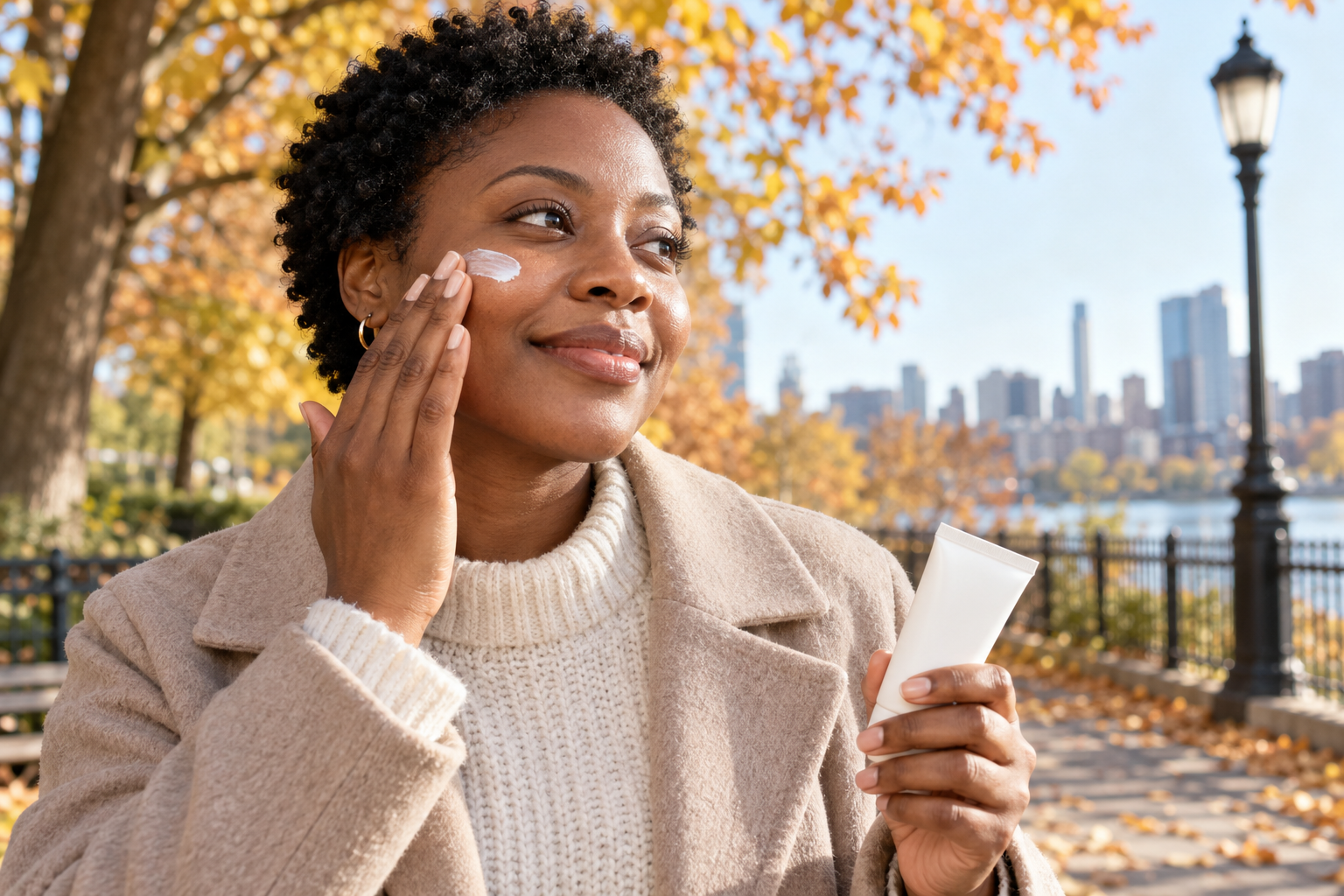
When it’s cold outside, sunscreen can feel like a summer product left in the wrong season. But temperature and ultraviolet exposure aren’t the same thing. A comfortable November afternoon, a chilly walk, and a warm-weather trip can all involve sun exposure.
The practical challenge is finding a formula you can use appropriately. A sunscreen that looks chalky, feels unpleasant, or interferes with makeup may spend more time in the cabinet than on your skin. Understanding the label helps you make a choice beyond a high number on the front.
As an Amazon Associate I earn from qualifying purchases. If you shop through affiliate links in this post, iGlamorBar may earn a commission at no additional cost to you.
What SPF does and doesn’t tell you
SPF primarily describes protection against sunburn from UVB under testing conditions. It doesn’t tell you that an application lasts all day, and a higher number doesn’t eliminate the need to reapply.
Broad spectrum indicates protection against UVA as well as UVB. Water resistance is a separate claim with a defined time, usually 40 or 80 minutes. No sunscreen is waterproof.
The AAD recommends broad-spectrum SPF 30 or higher and water resistance. Actual protection depends on applying and reapplying the product as directed, alongside shade, clothing, and other protective habits.
Do deeper skin tones need sunscreen?
Yes. More natural pigment doesn’t make skin immune to sun damage. People of all skin tones can experience harm from ultraviolet exposure.
For some readers, cosmetic appearance is the main obstacle to consistent use. A white cast or mismatched tint can make a formula feel unwearable. That’s a real product-selection issue, not a reason to abandon protection.
If you’re managing dark spots, consider whether a tinted sunscreen containing iron oxides fits your needs. Visible light can contribute to pigmentation in susceptible skin, and an appropriate tint may offer a benefit beyond the standard SPF question.
Mineral and chemical filters: a practical comparison
Mineral sunscreens use filters such as zinc oxide and titanium dioxide. Chemical, or organic-filter, sunscreens use other approved UV filters. Both categories can provide effective protection when the finished product is appropriately tested and used as directed.
The distinction doesn’t establish that one whole category is always gentler, better under makeup, or suitable for every skin tone. A person can tolerate one formula and dislike another in the same category.
Choose using the complete label and your experience with the finished product. If eye stinging, a rash, or a poor finish makes one option difficult to use, look for another rather than trying to tolerate an unsuitable product indefinitely.
Three product options with different practical roles
For a moisturizing, untinted option: Black Girl Sunscreen SPF 30
Black Girl Sunscreen SPF 30 is the original face-and-body lotion designed with melanin-rich skin in mind. It may appeal to someone who wants an untinted, moisturizing option and has struggled with the appearance of mineral white cast.
It’s different from the brand’s matte, spray, and kids products, so match the actual listing. A moisturizing finish may feel appealing on dry skin and too shiny for someone seeking a very matte look. The brand lists water resistance, but always follow the exact package directions for outdoor activity and reapplication.
For facial tint: CeraVe Hydrating Mineral Sunscreen SPF 30 Face Sheer Tint
CeraVe Hydrating Mineral Sunscreen SPF 30 Face Sheer Tint is an option for someone who wants mineral filters and a sheer tinted finish. Light, Medium, and Deep variants allow more choice than a single universal tint.
The useful question is whether one of those shades works at the amount needed for protection. Don’t blend sunscreen with foundation to create a preferred color, since that can disrupt how it is applied. Choose a suitable formula and apply makeup separately if desired. Check the specific label before relying on it for swimming or heavy sweating.
For a face-and-body outdoor option: La Roche-Posay Anthelios Melt-In Milk Sunscreen SPF 60
La Roche-Posay Anthelios Melt-In Milk Sunscreen SPF 60 is a broad-spectrum face-and-body lotion whose US label lists 80 minutes of water resistance. It may suit someone looking for a shared face/body option for an outdoor day rather than a small tinted facial tube.
SPF 60 doesn’t mean you can use half as much or skip reapplication. Texture and eye-area comfort remain individual, and a face-and-body label doesn’t guarantee everyone will prefer it under makeup.
Build protection around your actual day
For a short routine at home followed by errands, consider what product you’ll use reliably on exposed skin. For an outdoor event, plan enough product, reapplication, shade, and protective clothing rather than assuming a single morning application covers everything.
Follow the label’s pre-exposure timing. Reapply at least every two hours outdoors and after swimming or sweating according to the product’s instructions. Remember easily missed areas such as ears, the neck, and exposed hands.
Driving and sitting near windows can also affect exposure, particularly to UVA. That doesn’t require treating every indoor day identically to a beach day. It means thinking about where you spend time rather than judging the need for protection only by how hot the air feels.
What if sunscreen pills under makeup?
First check how many optional layers you’re using. Several serums, a heavy moisturizer, primer, and sunscreen can make a routine harder to blend. Keep sunscreen application appropriate and experiment with simplifying a cosmetic layer instead.
Test the combination on an ordinary day. A sunscreen that works beautifully alone might not be your favorite under a particular foundation. That doesn’t necessarily mean either product is defective; the pairing may simply be inconvenient for you.
Never reduce sunscreen to a tiny dab just to improve the makeup finish. Find a workable combination instead.
Frequently asked questions
Is foundation with SPF enough?
Don’t assume the amount of makeup you normally wear provides labeled sunscreen protection. A dedicated, appropriately applied sunscreen is a more practical foundation for protection.
Can I mix two sunscreens to improve the color?
Avoid creating your own blend. Mixing can change the application and film formation of tested formulas. Choose a suitable finished product.
Does sunscreen expire?
Yes. Check expiration information and storage directions. A large discounted supply isn’t useful if it expires before you’ll use it.
What’s the biggest obstacle to your daily sunscreen: the finish, the shade, the feel, or remembering to reapply outdoors?
Related reading: Why Your Dark Spots Aren’t Fading Even Though You’re Using Brightening Products.


